- Length: 114 ft-7 in overall
- Beam: 32 ft-3 in
- Depth of Hold: 10 ft-3 in
- Complement: 140-160 men and boys
Armament:
- As-built: Upper deck: 22 x 9 pounder long guns Quarterdeck: 2 x 6 pounders
- By 1815: Upper deck: 14 x 9 pounder long guns and 8 x 18 pounder carronades Quarterdeck: 2 x 6 pounders
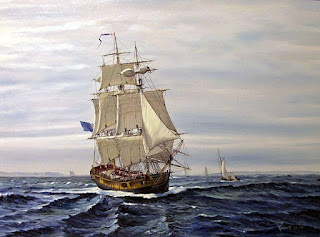
Inspiration paintings:

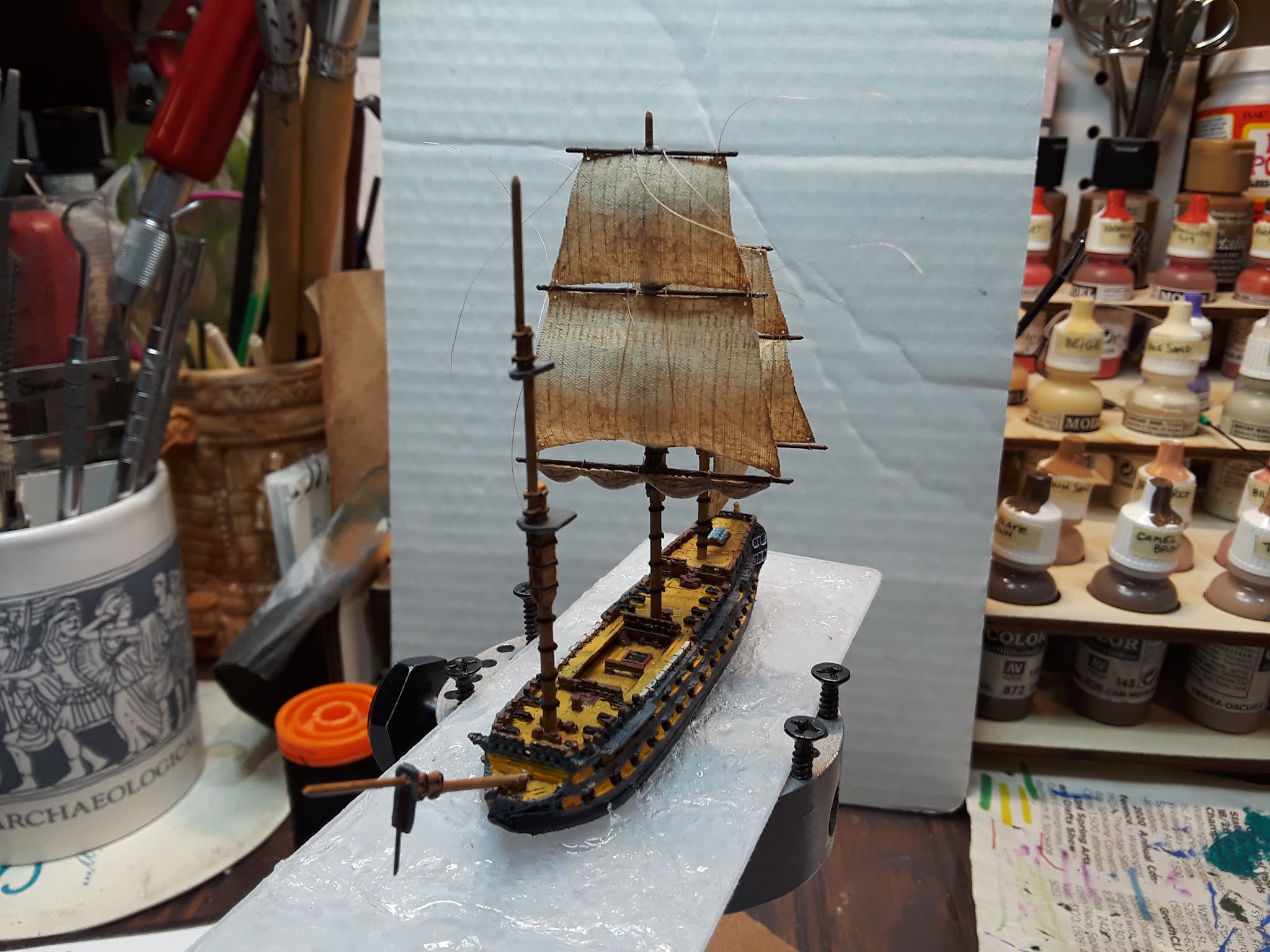
 This is a 3D resin model from Henry Turner. It is beautifully detailed and quite delicate. While trying to drill or install rigging tie-off points, I had several breakouts that I had to come up with ways to repair. I also found that painting the thin rails with cyanoacrylate glue considerably strengthens them enough to hold rigging. Another challenge was creating the Iconic Pandora figurehead and getting it as right as I could at this scale.


Drat! While photographing Pandora I accidently knocked a 1/1200 West Indiaman to the floor. I don't believe it was much damaged until I stepped back to located it. I drug it under my shoe. She lost her bow sprit and foremast in the squall, but the rigging held it pretty much together. Hopefully the repairs won't be too costly.
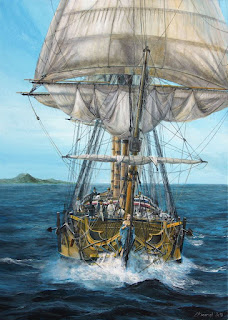 |
| Figurehead inspiration |
This is a 3D resin model from Henry Turner. It is beautifully detailed and quite delicate. While trying to drill or install rigging tie-off points, I had several breakouts that I had to come up with ways to repair. I also found that painting the thin rails with cyanoacrylate glue considerably strengthens them enough to hold rigging. Another challenge was creating the Iconic Pandora figurehead and getting it as right as I could at this scale. 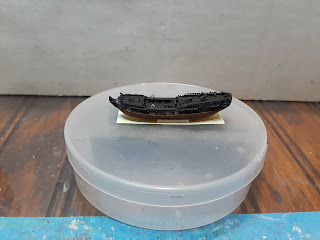 |
| Note the brass loops for the mainmast stays. A breakout on the starboard side had to be repaired. |
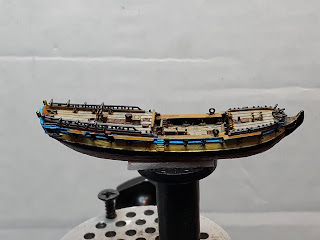 |
| I just think this class had beautiful lines! |
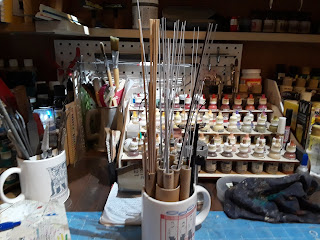 |
| My mast stock arranged by size |
 |
| I had to create a new page for my mast log since I had not built a ship of this size in this scale yet. |
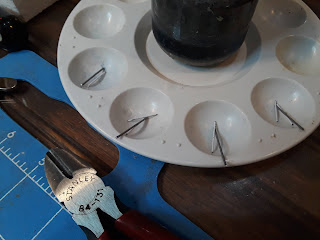 |
| Masts cut and separated from bow to stern |
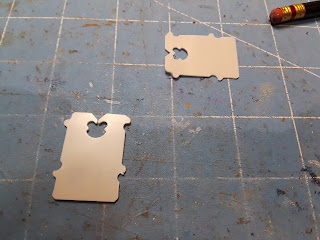 |
| Plastic bread clips make great fighting platforms |
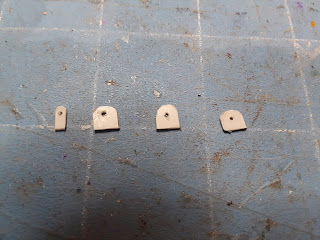 |
| Sprit plate and platforms cut and drilled |
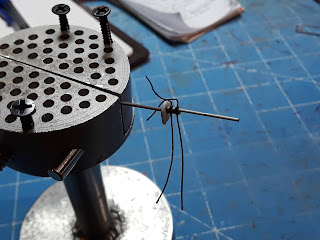 |
| Mast and top mast |
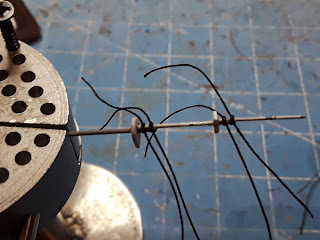 |
| T'gallant mast added |
 |
| First mast stage complete |
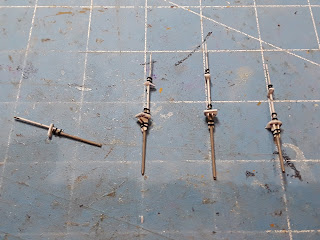 |
| Trees added to complete the masts |
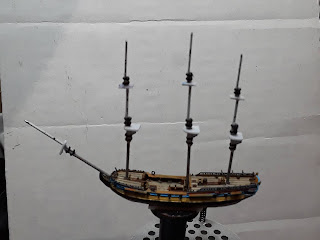 |
| Dry fitted |
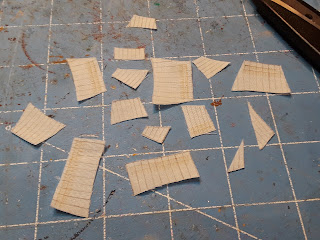 |
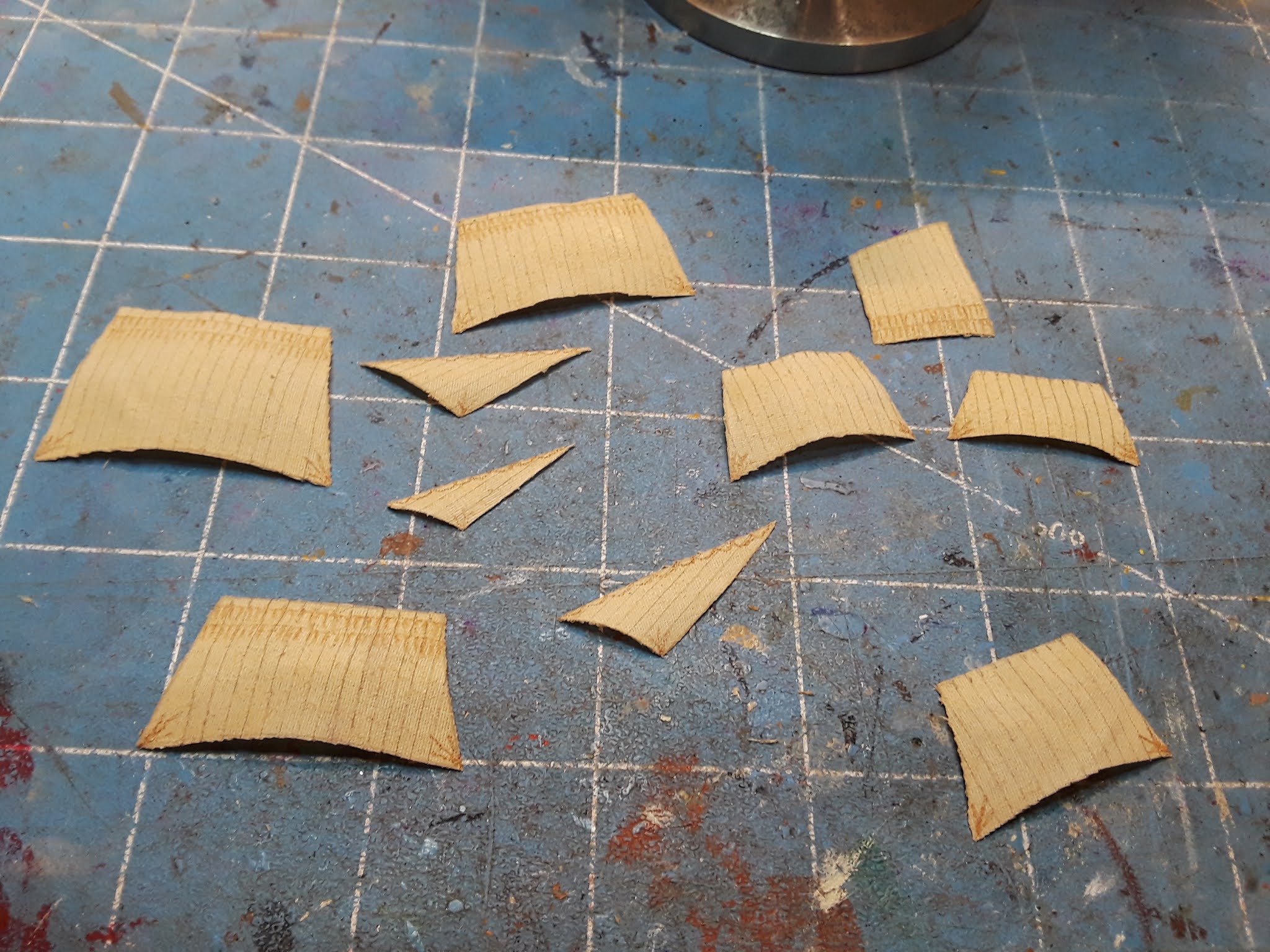
| Cloth sails cut out |
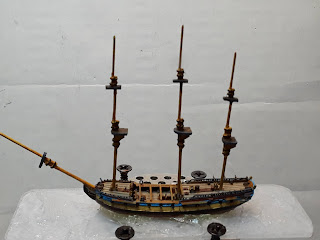 |
| Masts cemented in place |
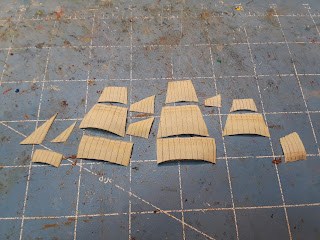 |
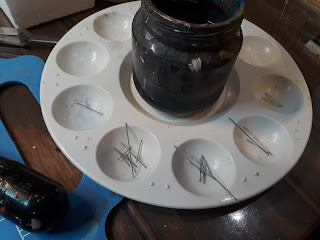
| Sails tinted and shaped |
 |
| Spars cut and separated by mast |
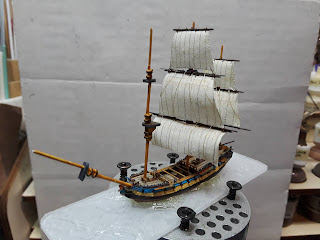 |
| The process is to glue on the spars. When dry, tie them to the mast. Then tie on the sails |
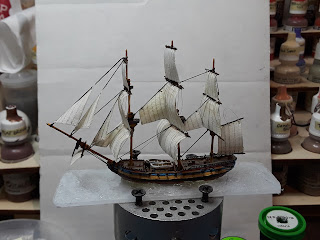 |
| First half of the standing rigging is done. At this point I stop to make the ratlines and get them mounted before continuing the rigging. |
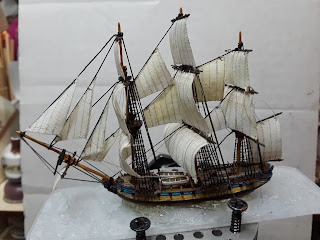 |
| Ratlines are on and the standing rigging is complete. The last steps are the running rigging and the flag. |
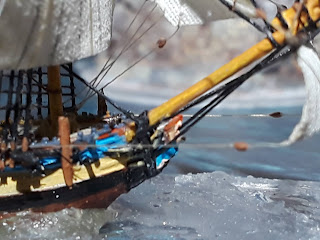 |
| Best I could do with the figurehead |
Drat! While photographing Pandora I accidently knocked a 1/1200 West Indiaman to the floor. I don't believe it was much damaged until I stepped back to located it. I drug it under my shoe. She lost her bow sprit and foremast in the squall, but the rigging held it pretty much together. Hopefully the repairs won't be too costly.